The Iliad - book review

I had not thought about the Iliad in a long time before tackling this original classic, not since as a child at my grandfather’s 3 o’clock Sunday Tea. My grandfather was a “Greek scholar“ having read the Iliad, the Odyssey, and other Greek stories, with his third time through the Bible for the years my sisters and I came for Sunday tea, all in the original Greek. A bust of Homer overlooked our table as we heard myths of the gods, passages from the Bible and other classical delicacies. Suitably prepared, I thought I was ready to take on this story.
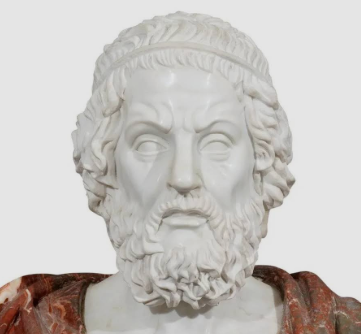
The Iliad is the oldest commonly known story ever written. The manuscript memorialized the oral tradition of Homer, whom historians can argue whether he was many bards, or a single blind man, who recited stories in poetry; in this case, a story of war, love, honor, and power. It is an amazing window into the Bronze Age, reflective of the time and its culture, while experiencing timeless themes of the human condition.
The story begins with an argument among three goddesses, at a wedding, as to who be the fairest? As fate unfolds three goddesses inquire of a mortal’s favor as arbiter, handsome Paris, Prince of Troy. This engagement assumes the reader / listener is familiar with all these characters, as the contemporary polytheistic view toward events in the world would. Gods and goddesses weave in and out of the story, influencing mortals, visiting them through others, while wallowing in their own pettiness, selfishness, and vanity. Sometimes the gods seem more human than the mortals.
Back to the “fairest” argument: Hera, Zeus’s wife and queen of the gods, the goddess of organization, such as keeping an efficient house, offers him political power should he choose her. Athena, the wise, offers him a lifetime gift of strategy and military success. Aphrodite, the goddess of sex, beauty, and procreation offers Paris the most beautiful woman in the world (Helen). Paris chooses Aphrodite, to get the beautiful woman.
How his choice unfolds is critical to the story, and reflective of how the gods cultivate and fan human tragedy. While a guest of Menelaos, the king of Sparta, Paris fell in love with Menelaus’ beautiful wife, Helen, …and left, took her back home to Troy, along with her furniture and her personal items. The Greeks couldn’t stand for this affront and formed an alliance, led by Menelaos’ bother, Agamemnon. (We learned all these names when children with Bumpa’s stories, but keep reading and it all comes together.) The pan-Hellenistic “Greece” we are familiar with today with philosophy, science and democracy hadn’t yet congealed; this story pre-dates philosophers Aristotle and Plato by four centuries. Many regions, organized around city-states, embarked on this adventure: Achaians, Danaans, and Myrmidons, Achilles’ warriors.
Achilles is the central figure of the story, straddling two worlds, as the son of Peleus, a mortal Greek king, and Thetis, a sea nymph goddess. The “Sacker of Cities”, the greatest warrior of the day, refused to join Agamemnon and the other Greeks on sacking Troy to return Helen to Menelaos. For a current analogy, think athletic superstars' contract holdout. Though his own Myrmidon army was camped nearby on the Trojan shore along with the other Greek tribes, he was angry at Agamemnon who had inspired, coordinated and launched these thousand ships.
To appreciate Achilles' holdout requires an understanding of Bronze Age war, hierarchy, and power dynamics. When an army sacked a city, the victors killed all the men and took the women as slaves, sex slaves or artisan slaves, along with whatever plunder was worth carrying off. If the predicate for war was powerful men’s ego, rape and pillage were its tools.
Achilles had taken Briseis as his wife after killing her husband while sacking another city; he ended up falling in love with her. Agamemnon had higher standing than Achilles and wanted Briseis for himself. So he took her. The greatest warrior of his day, Achilles found such taking disrespectful, capricious and insulting, and refused to go back to war to serve the man who stole his wife.
As the battle intensified, the gods’ intercession began to turn the battle in favor of the Trojans; Greeks died by the score. Menelaos and Agamemnon were eventually injured, great warriors Diomedes, Odysseus and other heroes, also sidelined. Troy began burning Greek ships at the shoreline. The Greeks were ready to board their ships and head home, without Helen. Things were looking grim for these unwanted visitors.
Take pause first to return from the activities of these kings and warriors to the battlefield itself, the story full with explicit detail and line volume. This is a story about war, with repeated descriptions of spears and arrows impaling men, cutting runners down with glistening swords from speeding chariots. Victors stole their victims' armor as valuable plunder. Even as The Iliad focused on an eleven day period toward the end of a 10 year war, Homer reveals a cast of thousands: over a thousand specifically named characters appear in this 16,000 line ballad, and upon so many deaths, readers learn about lineage, hometowns, and earlier battle victories of each. In one poignant scene both sides permit a nighttime collection of bodies to permit funeral pyres for fallen comrades; this scene provides stark juxtaposition from the later epic battle between Achilles and Hektor.
As Greeks were dying on the battlefield and things looked their bleakest, Agamemnon sent a messenger to Achilles offering many gifts: 7 tripods not yet fired, 20 cauldrons, 10 bars of gold, seven skilled women from Lesbos, plus Briseis, whom he insisted he ‘never bedded.’ Still Achilles refused him, his pride and ego still central to his actions. Only after Achilles’ close friend and aid Patroclus was killed in battle did Achilles decide to accept these gifts from Agamemnon and enjoin the war.
The Trojan super protagonist is Hektor, the epitome of grace, honor, skill and courage. And humanity. When Hektor’s wife Andromache urged him to direct the battle safely from the ramparts of the city, he replied that he could not look into the eyes of women whose husbands he sent to the battlefield without him. Hektor is also Paris’ brother, both sons of Priam, the old Trojan king with many sons and many wives. The brothers are opposites in so many ways, but Hektor would defend his brother’s honor as his father’s son. The greatest warriors of their time - Achilles and Hektor - ultimately face off, the great tragedy of Hektor inevitable.
Meanwhile, the gods and goddesses looked down from Mount Olympus - when they weren't taking the form of whispering people on the bloody plain - savage fans safely above, as in a vast stadium, cheering from the luxury boxes, abetting where they could, behind powerful Zeus’s back. Homer gives listeners (readers) a front row stadium seat to watch these shenanigans play out on Mount Olympus as men slaughter each other and steal their victims' armor.
Character descriptions appear repeatedly, such as “fair-haired Helen”, "ox-eyed Hera", or “white-armed Andromache, (or Aphrodite), a metric of social status since fair skinned ladies resided inside, their arms never blemished by the sun. As common as visual descriptions, other references reflect the patrilineal heritage of the day: “son of Atreus” is used synonymously with both Menelaus and Agamemnon; Zeus, the “son of Cronus”; and Hektor and Paris both “son of Priam”. Contemporary listeners (readers) knew these relationships as part of the cultural fabric; a browser is helpful today. Repeated use helps gain familiarity, as with any story where descriptive name substitutes can enhance character depth.
Back to the tragedy, beloved Hektor, who showed brief cowardice before courage, was ultimately cut down by Achilles, his lifeless body dragged across the plains, face down, attached by his punctured ankles, reflecting the timeless reality of war’s hatred-driven behavior. Achilles was the Greek hero, but he was a hard, cruel, vindictive man.
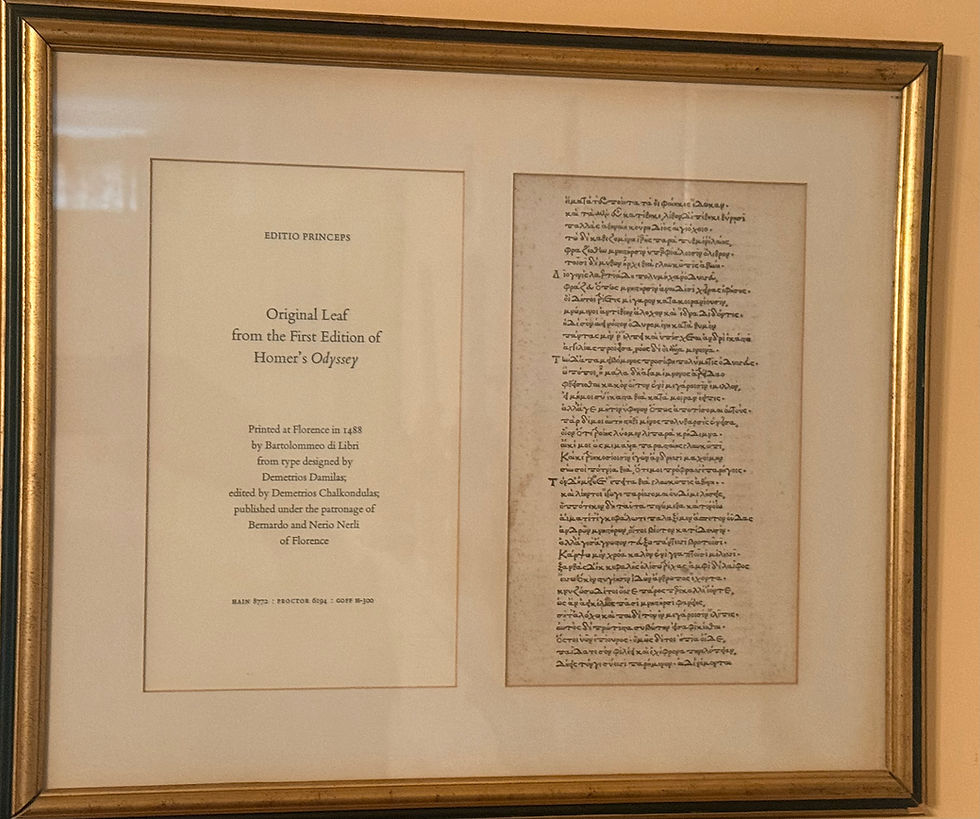
The story concludes before the famous horse penetrates the walls of Troy. For the horse scene and Achilles’ demise, you have to pick up Homer’s sequel, The Odyssey.
This ancient ballad has so much to offer. The contemporary account of 11 days at the end of a ten year war showcased the horrors of war with unvarnished descriptions: while also exploring family dynamics, measures of love, jealousy and pride, and large doses of ego, honor, courage, and duty. It is the original great classic, well worth the effort.


Comments